



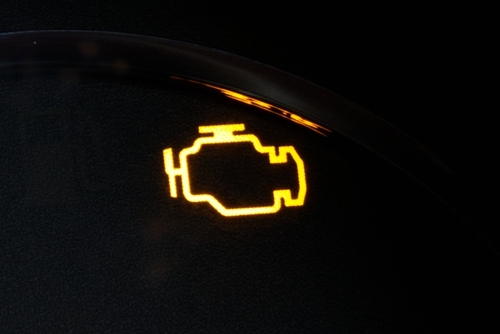
Can You Drive with a Check Engine Light On?
That little amber glow on your dashboard can show up at the worst possible time — right before a road trip, on the way to work, or late on a Friday night. If you've ever asked yourself, "Can you drive with a check engine light on?" — you're not alone, and our team at C. Harper Buick GMC in Connellsville, PA hears it all the time. The short answer? It depends. But here's what you actually need to know.
Key Takeaways
- A solid check engine light usually means a less urgent issue, but it still needs attention soon.
- A flashing check engine light signals an active, serious problem — pull over safely and don't drive until it's diagnosed.
- Ignoring the light can turn a minor repair into a major (and expensive) one.
- Common causes include a loose gas cap, a faulty oxygen sensor, a failing catalytic converter, and more.
- Getting a diagnostic scan is quick, affordable, and the only way to know for sure what's wrong.
Can You Drive with a Check Engine Light On?
Can you drive with a check engine light on? Technically, yes — but whether you should depends almost entirely on what the light is doing and how your vehicle is behaving.
If the light is solid and your car is driving normally with no strange sounds, smells, or performance issues, you've likely got a bit of time to schedule a service appointment. That doesn't mean ignore it — it means don't panic, but do act within a day or two. On the other hand, if the light is flashing, that's a different story entirely (more on that below). And if you notice rough idling, a loss of power, overheating, or anything else that feels off, pull over when it's safe to do so and call for help.
Is it okay to drive with the engine light on for a day or two while you line up an appointment? For a solid light with no other symptoms, most mechanics would say yes — cautiously. But every mile you drive without knowing what's wrong is a bit of a gamble. The check engine light is your vehicle's way of waving a flag. Ignoring it doesn't make the problem go away; it usually makes it worse.

Signs You Should Pull Over Immediately
- The check engine light is flashing or blinking
- You notice smoke coming from under the hood
- The temperature gauge is climbing toward the red
- You smell burning oil, rubber, or something chemical
- The car is stalling, misfiring, or losing power rapidly
What's the Difference Between a Solid and Flashing Check Engine Light?
This is one of the most important distinctions you can understand as a driver.
A solid check engine light indicates that your vehicle's onboard diagnostic system has detected a fault — something is out of spec or failing. It might be a minor issue, like a loose gas cap, or something more significant, like a faulty oxygen sensor or a failing catalytic converter. Either way, it warrants a diagnostic scan, but it usually doesn't mean you need to stop driving right this second.
A flashing check engine light, though? That's urgent. A blinking light almost always indicates an active engine misfire — meaning unburned fuel is being pushed into your exhaust system. This can cause serious damage to your catalytic converter in a very short amount of time, and catalytic converters aren't cheap to replace. Is it okay to drive with a check engine light that's flashing? No, not if you want to avoid a much bigger repair bill. Reduce speed, avoid hard acceleration, and get the vehicle to a shop or safe location as soon as possible.
Solid vs. Flashing: A Quick Comparison
| Light Status | Urgency Level | What It Likely Means |
|---|---|---|
| Solid / Steady | Moderate | Stored fault code; non-emergency issue |
| Flashing / Blinking | High | Active misfire or severe engine issue |
| Solid + Other Symptoms | High | Could indicate multiple issues |

How Long Can I Drive with the Check Engine Light On?
How long can I drive with the check engine light on? For a steady, non-flashing light with no other symptoms, many drivers safely drive a short distance — say, to finish a commute or get to a nearby shop. Beyond that, you're taking a risk you don't need to take.
Here's the thing: the check engine light can cover a wide range of possible issues. Some are genuinely minor. Others — left unaddressed — can cascade into much bigger problems. A faulty oxygen sensor that goes ignored can eventually damage your catalytic converter. A small coolant leak can turn into an overheated engine. What starts as a small fix can become an expensive headache, all because the light got pushed to the back burner.
Is it okay to drive with a check engine light on for weeks at a time? Mechanics would strongly advise against it. Without a diagnostic scan, you're essentially driving blind. You don't know if you're dealing with something trivial or something that's actively chewing through your engine. The sooner you get it checked, the better your chances of keeping the repair simple and affordable.
Common Reasons the Check Engine Light Comes On
- Loose or damaged gas cap — one of the most common and easiest fixes
- Faulty oxygen (O2) sensor — affects fuel efficiency and emissions
- Failing catalytic converter — expensive if ignored too long
- Bad spark plugs or ignition coils — cause misfires and rough running
- Mass airflow sensor issues — impact engine performance and fuel economy
- EVAP system leak — often related to fuel vapors escaping
- Transmission problems — can trigger the light along with shifting issues
Why You Shouldn't Ignore It: The Real Risks
Putting off a check engine light diagnosis isn't just risky for your vehicle — it can affect your safety and your wallet in ways that add up fast.
From a safety standpoint, some of the issues that trigger the light can lead to sudden breakdowns. Imagine losing engine power on a busy highway or having your vehicle stall in an intersection. These aren't far-fetched scenarios — they're exactly what happens when early warning signs go ignored for too long.
From a cost standpoint, early intervention almost always saves money. Catching a bad sensor before it damages your catalytic converter. Spotting a minor vacuum leak before it causes overheating. Getting ahead of a misfire before it wears down your engine internals. The check engine light is designed to catch problems early, and that's only useful if you actually respond to it.
And there's the emissions angle, too. Many of the issues that trigger the light affect how your vehicle burns fuel and manages emissions. If you're due for an emissions inspection, a stored fault code will cause an automatic failure. Getting it resolved proactively keeps you ahead of that, too.
Schedule Service at C. Harper Buick GMC
If your check engine light is on — solid or flashing — the easiest next step is scheduling a diagnostic appointment at C. Harper Buick GMC in Connellsville, PA. Our service team can pull your fault codes, explain exactly what's going on, and walk you through your options clearly and honestly. No guesswork, no pressure. Just answers.
Don't wait until a small problem turns into a big one. Schedule your service appointment today.
Schedule Service AppointmentFrequently Asked Questions
Is it safe to drive with the check engine light on?
It depends on whether the light is solid or flashing. A solid light with no other symptoms is usually safe to drive on for a short period, but a flashing light means you should stop driving and get it diagnosed right away.
What does a flashing check engine light mean?
A flashing check engine light almost always points to an active engine misfire, which can quickly damage your catalytic converter. It should be treated as urgent — reduce speed and get to a shop as soon as possible.
Can a loose gas cap cause the check engine light to come on?
Yes — a loose, missing, or cracked gas cap is one of the most common triggers. Try tightening it and see if the light clears after a few drive cycles; if it doesn't, a diagnostic scan will pinpoint the real cause.
How do I know what's causing my check engine light?
The only reliable way to know is an OBD-II diagnostic scan, which reads the fault code stored in your vehicle's computer. Many auto parts stores will do this for free, but a dealership service center can give you a full interpretation and repair plan.
Will the check engine light turn off on its own?
Sometimes — if the issue was temporary (like a loose gas cap that you've since tightened), the light may clear after several successful drive cycles. But if there's an underlying problem, it'll come back.
How much does it cost to diagnose a check engine light?
Diagnostic fees vary depending on the type of scan and code interpretation. At C. Harper Buick GMC, our service team will give you a clear explanation of what was found and what it'll take to fix it.